Where a panel can go on your home
Your roof, wall or garden, read against the rules.
Read moreLegal in Great Britain since 27 August 2026. Send us a postcode and we will tell you what the rules allow there.
Plug-in Solar Britain / What you get
One device per household, up to 800 VA, no battery, and on the official register. Here's what that means when you buy one.
The interim product specification, version 2.0 of July 2026, and the ENA Type Test Register, read directly on 13 September 2026.
No maker can sell one of these until three things have happened: the type has been tested against G98, the device has been entered on the ENA Type Test Register, and the association has told the maker in writing that it passed. That leaves a buyer one plain question to ask about any kit. Is this model on the register.
Anybody can search it and no login is wanted. Each record carries the maker, the model, the type, the capacity and a status. Models that failed are kept there too, marked non-compliant, which is what makes it more useful than any seller’s own table. Where a record reads compliant, engineers at the association have looked at the device and found it acceptable for network operators to live with.
Nothing reaches you from us without a record. Send us the make and model of anything you have already bought and we will pull its record up with you.
On one day in September 2026 we read two British sellers describing the same microinverter. One called it fully G98 compliant and certified for connection. The other had it filed under products that are not on the register, and said it could not lawfully go into a socket. We have not settled that argument and we are not going to guess at it. It is why every device goes past the register here rather than past a seller.
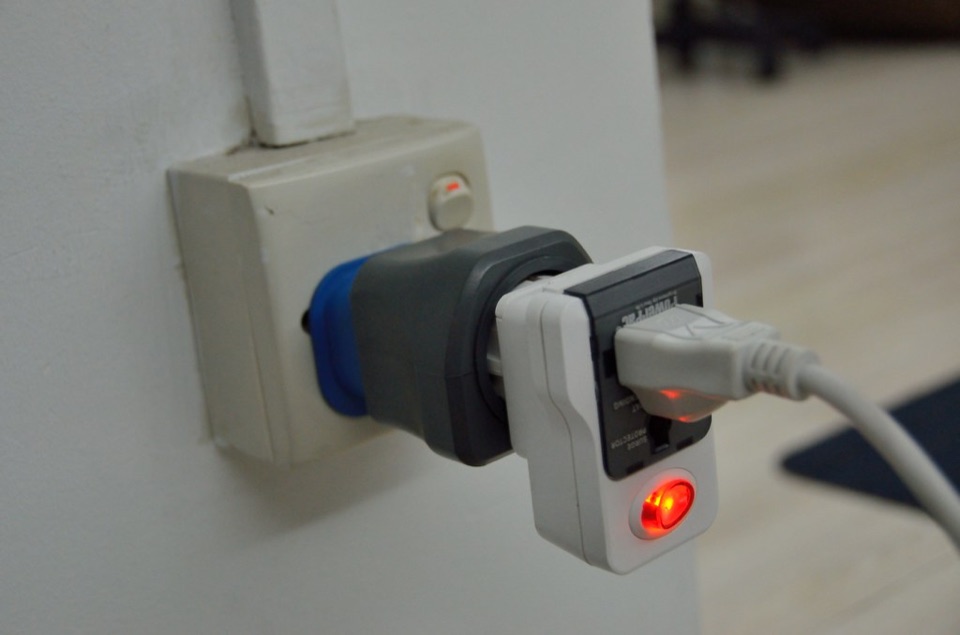
A standard plug in a standard socket. Indoors that is the whole connection. The question is what sits behind it on the circuit and what else is already drawing on that circuit.
Panels feeding the inverter can add up to 2000 watts while the inverter still holds to 800 VA going into the house. Past 960 watts of panel the specification wants somebody qualified to look at whether the installation suits the property, a precaution it borrows from the German standard.
So a listing quoting one of those figures has told you half of what you need. Ask for both.
Neither a plug-in battery on its own nor a solar device with storage inside it was brought into the approved class. Buy a kit with storage attached and you are outside what was approved in August. Consultation responses said the exclusion would cut the payback, the government wrote that down, and the exclusion stayed.
It decides what you actually save. With no storage, the benefit is whatever you happen to be running while the sun is on the panel.
Four things are ruled out, and the specification puts them twice: on the device marking and in the instructions.
A panel standing in a garden is precisely where a household reaches for a lead off the kitchen socket. Get the outdoor socket done first and the panel goes up afterwards.
Instructions with a compliant device are required to tell you to ask your insurer whether it changes anything. Make that call before the box arrives. Responses to the consultation kept returning to old houses and old wiring as the practical danger with these products, and the specification agrees: if a socket looks doubtful, have somebody qualified look at it first.
Not for plugging it in. The specification covers devices meant to be installed and run by ordinary people. You do need one the moment anything touches the fixed wiring, an outdoor socket included.
A single panel carrying its own inverter, with the direct current side already made up. Two component means you join panel to inverter yourself. Multi component means one or more panels plus a separate inverter, four panels being the ceiling.
No. The limit counts devices per home, not per circuit and not per room.
Send us the postcode and tell us what the surface is made of. We reply by email.
Start with my postcodePostcode and where you'd put it. We'll check the rules for you.
Name, email, postcode, and where you'd put the panel. We reply with whether the rules cover that spot, what it would generate there, and what happens next.
We reply by email. Nothing is sold on and no manufacturer pays us.